
Your people are performing.
But sustained pressure has a cost.
Nervous system regulation programmes for organisations that want to invest in sustainable performance - not just manage burnout after it happens.
✔ Practical tools people can use immediately - at their desk, before a meeting, in a high-stakes moment
✔ Evidence-informed approach grounded in stress physiology and breathwork science
✔ Designed and delivered by someone who has spent over a decade working in corporate environments
Performance Reset Workshops from £450. All other programmes quoted on request following a discovery call.

What organisations often notice
These are the shifts organisations working with Make Soul Space consistently report.
• Greater clarity and decision-making under pressure
• Reduced reactivity in high-stakes situations
• Improved communication and team cohesion
• More consistent performance during demanding periods
• Leaders operating with greater composure and presence
These shifts support a more stable, resilient and high-performing working environment over time.
We work with teams in financial services, consulting, technology, law, start-ups and leadership functions.
“It helped shift how we respond to pressure rather than just pushing through it. That’s been valuable for both individuals and the team.”
Senior Leader, Financial Services
Case Study
Supporting a senior team through sustained pressure
Sector: Investment Management | Organisation: Tavistock Investments Plc | Format: Ongoing sessions | Team size: 3
A small senior team operating under consistent high performance demands. The focus was on giving individuals practical tools to manage their own state - and building a shared capacity for clarity and composure across the group.
Sessions were delivered on an ongoing basis, integrated into the team's existing schedule with minimal disruption.
“I came in skeptical. What I found was that the work gave me something I hadn't expected - a way to stay grounded when things got intense. That's carried into how I lead and make decisions.”
Senior Leader, Tavistock Investments Plc

Why nervous system regulation matters
In high-performance environments, sustained pressure can keep the body in a prolonged stress response.
Over time, this affects clarity, decision-making, resilience and long-term performance.
Nervous system regulation provides practical tools to help individuals:
• Improve focus and decision-making under pressure
• Regulate emotional responses in demanding situations
• Recover more effectively between periods of stress
Evidence-informed approach
Grounded in research across stress physiology, breathwork and nervous system science, these techniques are associated with measurable improvements in how people perform under pressure.
Studies indicate that these practices may support:
• Reduced perceived stress and anxiety
• Improved emotional regulation
• Better sleep and recovery
• Greater attentional control
The focus is practical application - tools people can use at their desk, before a meeting, or during a high-stakes moment.

Corporate sessions
Sessions can be delivered in person or online for remote teams. No specialist equipment, space or kit required - participants don't need to change or move to a different room. Sessions can take place wherever your team already meets.
Grounding Series
60 mins, online, 3-part · £350/session or £950 for the series
For teams who want a lighter, whole-company reset - not another wellbeing initiative that sits unused after week one.
Performance Reset Workshop
A focused session for busy professionals who need tools that actually work - not another wellbeing initiative that sits unused.
A focused session designed for busy professionals who need simple, effective ways to manage stress and maintain performance throughout the working day.
Participants learn techniques they can use immediately before meetings, presentations and high-pressure moments.
Outcomes
✔ Improve focus and decision-making under pressure
✔ Reduce stress in high-demand situations
✔ Build quick, practical reset techniques
Duration: 90 minutes
Online: £450 | In person: £595
Ideal for: Teams, departments, project groups. Up to 20 participants.
Team Reset Sessions - Ongoing Support
For organisations that want to embed regulation into their working rhythm, not just address it in a single session.
Delivered weekly or monthly, these sessions reduce cumulative stress, maintain clarity during demanding periods, and build a team culture of sustainable performance. These sessions integrate easily into existing schedules and support consistent performance over time.
Outcomes
✔ Reduce ongoing stress and cognitive overload
✔ Improve team focus and communication
✔ Support recovery between demanding work periods
Duration: 60 minutes
Monthly or weekly retainer: from £600/month
Minimum engagement: 3 months
Ideal for: Ongoing team support, busy periods, project cycles
Half-Day Leadership Reset
Deeper experiential work for senior leaders and leadership teams. Focuses on regulation under pressure, decision-making clarity and leading with composure.
Ideal for leadership offsites, senior team days, or organisations where leaders want to go further than a single workshop allows.
Two ways to run this:
As a group session: the full 3 hours delivered together, building shared language and composure across the team.
As a shorter group session plus individual follow-ups: a condensed group intro, followed by up to 3 individual 45-minute 1:1s for leaders who want to work through what's coming up for them personally. Additional 1:1 sessions available at £200 each.
Outcomes
✔ Improve decision-making under pressure
✔ Strengthen emotional regulation and leadership presence
✔ Create a more stable and focused team environment
Duration: 3 hours, in-person
From: £1,200
Ideal for: Leadership teams, senior stakeholders, offsite modules
Sustainable Performance Programme
A structured programme designed to help teams build and embed practical nervous system regulation skills over time.
This format allows for deeper learning, behaviour change and measurable impact over time.
Outcomes
✔ Build long-term resilience and stress management skills
✔ Improve focus, recovery and consistency of performance
✔ Strengthen team cohesion and psychological safety
Duration: 6 weeks or bespoke, 90 minutes
In-person or online from: £3,500 (up to 10), £5,500 (up to 20)
Ideal for: Teams, departments, organisational programmes
Larger cohorts: quoted on request

Strategic programmes for organisations
For organisations with more complex needs, we design tailored programmes that go beyond a single session or defined course.
This might include a combination of leadership sessions, team programmes and ongoing support - built around your organisation's specific pressures, goals and timelines.
These engagements are designed collaboratively and typically suit organisations looking for deeper, longer-term impact.
If you're thinking at that scale, the best starting point is a conversation.
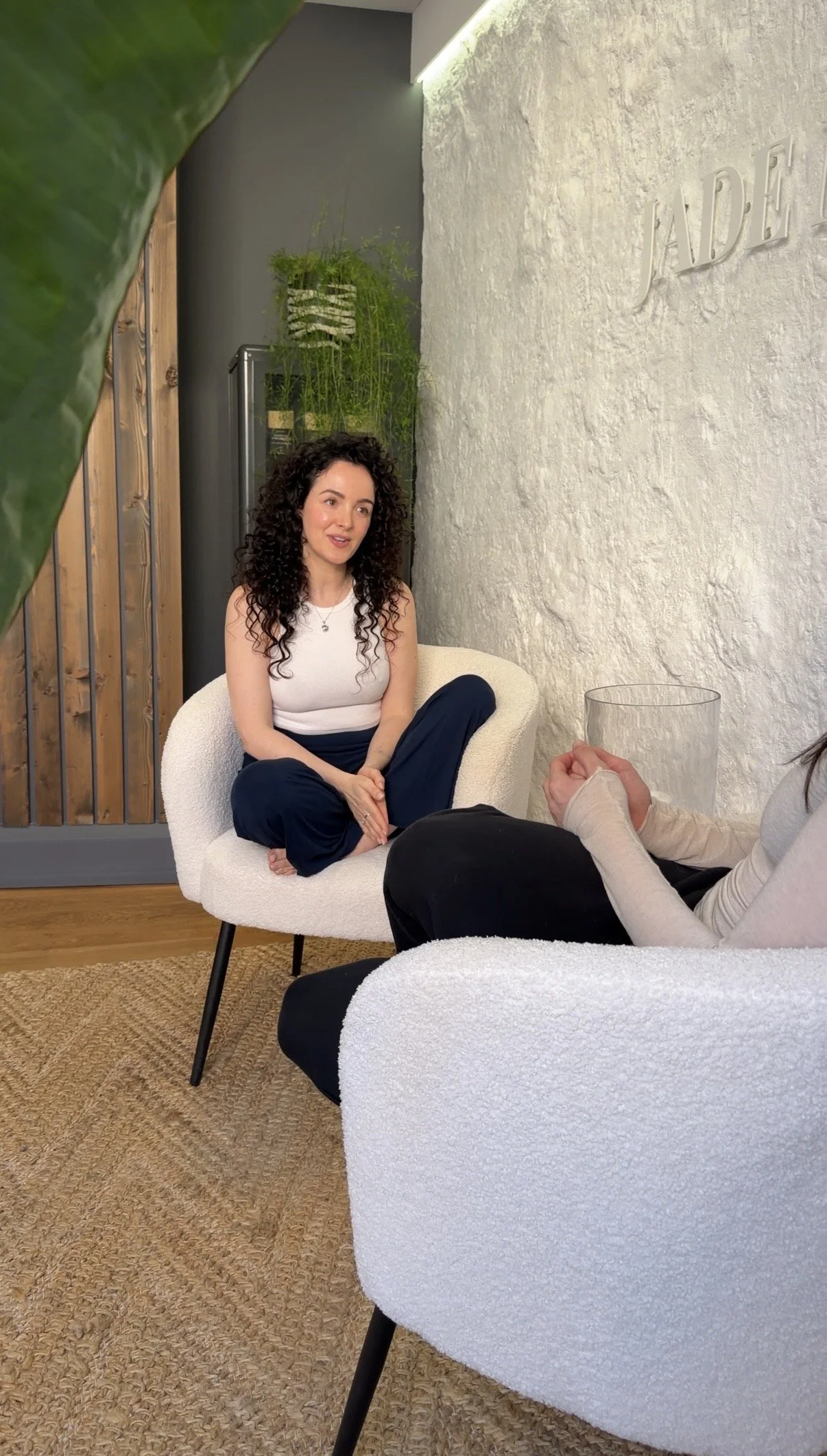
Bridging corporate experience and nervous system work
Katy spent over a decade in corporate marketing before retraining in somatic work and nervous system regulation. She knows what it feels like to make decisions under sustained pressure, to keep performing when the body is running on empty, and how stress accumulates long before it shows up in output.
That inside experience shapes everything about how these programmes are designed and delivered. This isn't generic wellbeing - it's built by someone who has lived the environment these programmes are designed for.
A note for financial services organisations
Financial stress is one of the most physically held forms of stress there is. It lives in the body - in shallow breathing, elevated cortisol, disrupted sleep and narrowed thinking.
Our programmes don't just help employees understand financial stress. They give them the tools to regulate it - in real time, during the working day.
This isn't financial advice or counselling. It's nervous system regulation applied to one of the most common and least addressed stressors in your workforce.
This makes them a natural complement to existing financial wellbeing initiatives.
Bring this into your organisation
If you're exploring ways to support your team's resilience, performance and wellbeing, we'd be happy to discuss what this could look like.
What to expect when you get in touch
You'll hear back within 24 hours
We arrange a short call to understand your team's needs
We recommend the right starting point for your team - whether that's a single session, an ongoing programme, or something bespoke.
You receive a clear proposal before any commitment